AI SEO in Singapore: How to Optimise Your Website for AI Search
AI SEO is changing how businesses get discovered online. Learn how Singapore businesses can combine SEO, GEO and AEO to improve visibility across traditional search engines and AI-powered platforms.

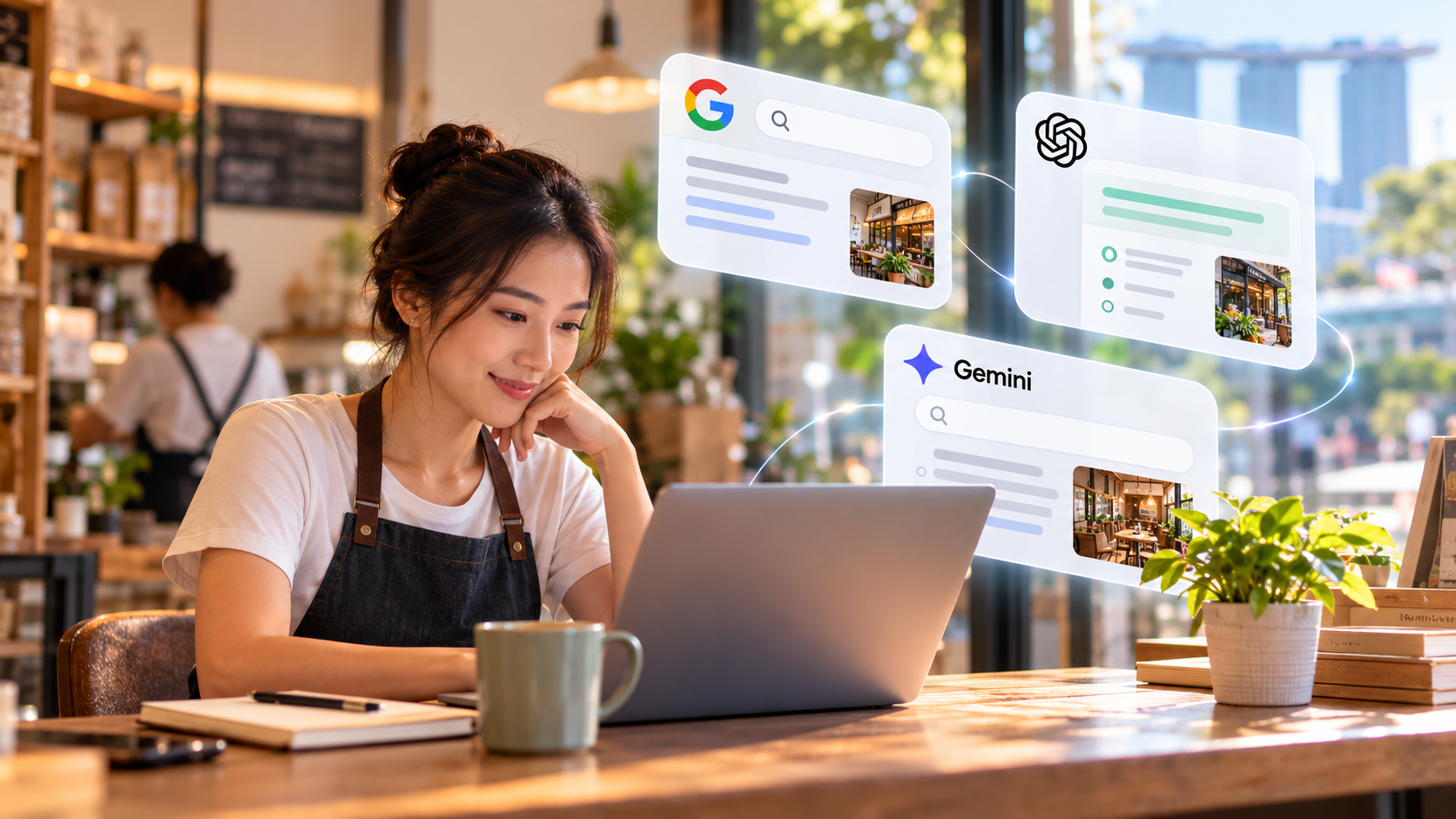
Search is changing. Customers are no longer relying solely on Google search results to discover businesses. They are also turning to AI-powered platforms such as ChatGPT, Google Gemini, Perplexity and Google AI Search to find information, compare services and explore recommendations.
For Singapore businesses, this raises an important question: how can your business stay visible when customers increasingly use AI to search?
This is where AI SEO comes in.
AI SEO combines traditional Search Engine Optimisation (SEO) with newer approaches such as Generative Engine Optimisation (GEO) and Answer Engine Optimisation (AEO). Together, these strategies help businesses improve how their information is discovered, understood and potentially referenced across search engines and AI-powered platforms.
In this guide, we explain what AI SEO is, why it matters for Singapore businesses and how you can prepare your website for the future of search.
What Is AI SEO?
AI SEO (Artificial Intelligence Search Engine Optimisation) is the process of improving a website's content, technical structure and online presence to support visibility across traditional search engines and AI-powered search experiences.
Traditional SEO focuses on helping websites appear in organic search results when users enter relevant keywords.
AI SEO builds on this foundation by considering how AI-powered systems retrieve, interpret, summarise and reference information when answering questions.
For example, a customer might search Google for:
"SEO agency Singapore"
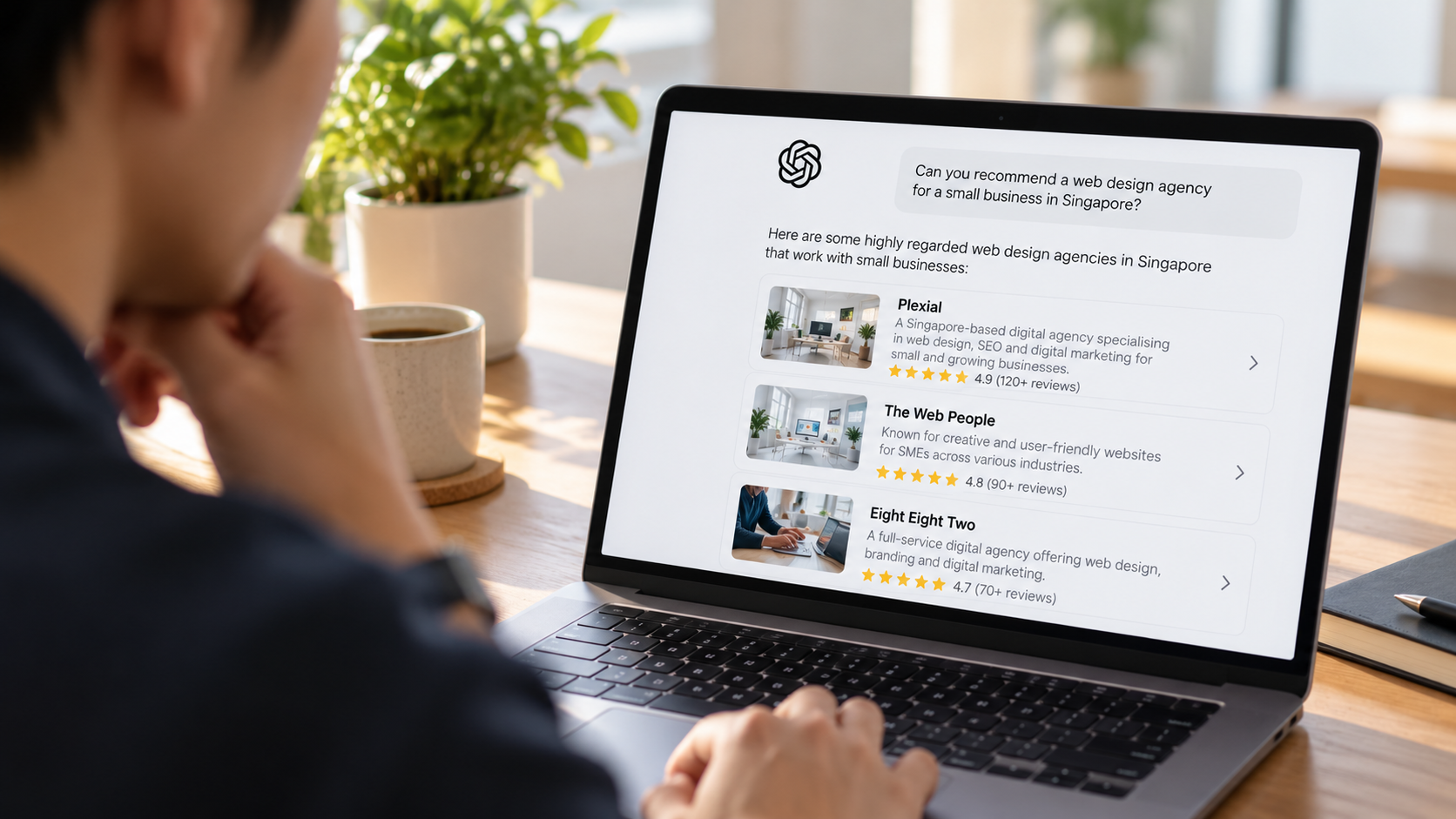
However, the same customer could ask ChatGPT:
"Which digital marketing agencies in Singapore specialise in AI search optimisation for small businesses?"
Both searches reflect a similar need, but the results may look different.
Google may display a list of relevant websites, while an AI assistant may generate a conversational response that explains options, compares providers or references supporting sources.
For businesses, the goal is no longer limited to appearing in search results. It also involves making their information clear, credible and accessible to AI-powered search systems.
AI SEO does not guarantee that a business will appear in AI-generated recommendations, but it can help establish a stronger foundation for online discoverability.
Why Is AI SEO Important for Singapore Businesses?
Singapore has a competitive digital business environment. Customers often research multiple providers before making a purchasing decision.
AI-powered search gives them another way to complete that research.
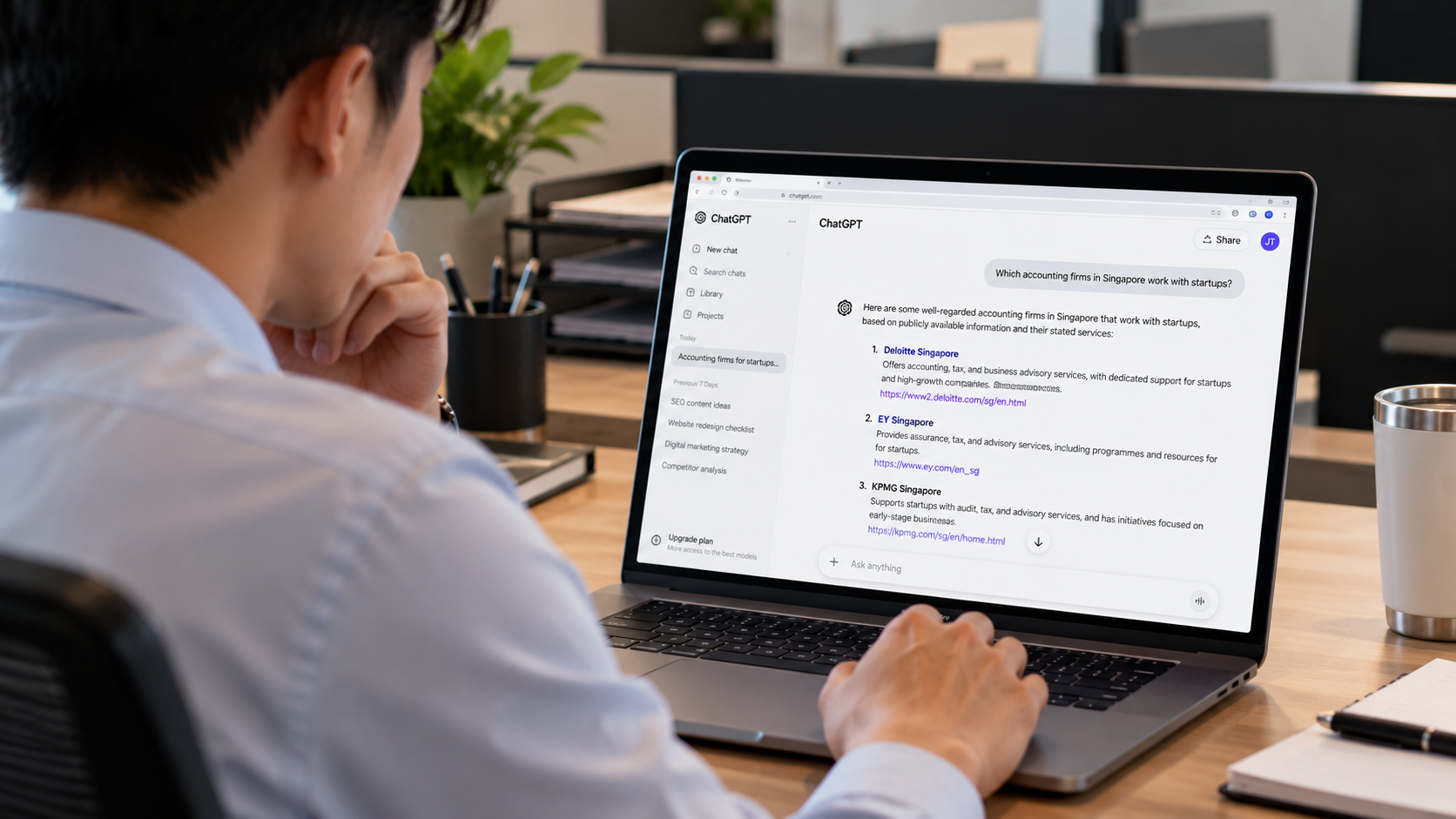
Instead of visiting several websites, a potential customer can ask an AI assistant to compare services, explain pricing or suggest suitable businesses.
For example:
- Which accounting firms in Singapore work with startups?
- What should I look for when hiring a website development agency?
- Which companies offer GEO and AEO services in Singapore?
- How much does SEO cost for a small business in Singapore?
- What is the difference between SEO and AI SEO?
These questions create opportunities for businesses that publish helpful, relevant and trustworthy information.
AI Search Is Changing Business Discovery
Traditional search usually requires customers to browse results and visit websites to gather information.
AI-powered search can combine information from multiple sources into a single response.
For example, someone researching website development may ask an AI assistant about suitable technologies, typical project requirements and how to compare agencies.
Businesses that clearly explain their services, experience and expertise may be better positioned to be considered when relevant information is retrieved.
AI Search Can Influence Purchasing Decisions

AI assistants are increasingly part of the research process, especially for customers comparing products or services.
A potential customer may ask several questions before contacting a business.
If your website provides clear answers to these questions, it can support discovery and help customers make more informed decisions.
However, AI visibility alone does not guarantee enquiries. Your website must still communicate why your services are relevant and provide a straightforward way for customers to contact you.
AI SEO vs Traditional SEO: What's the Difference?
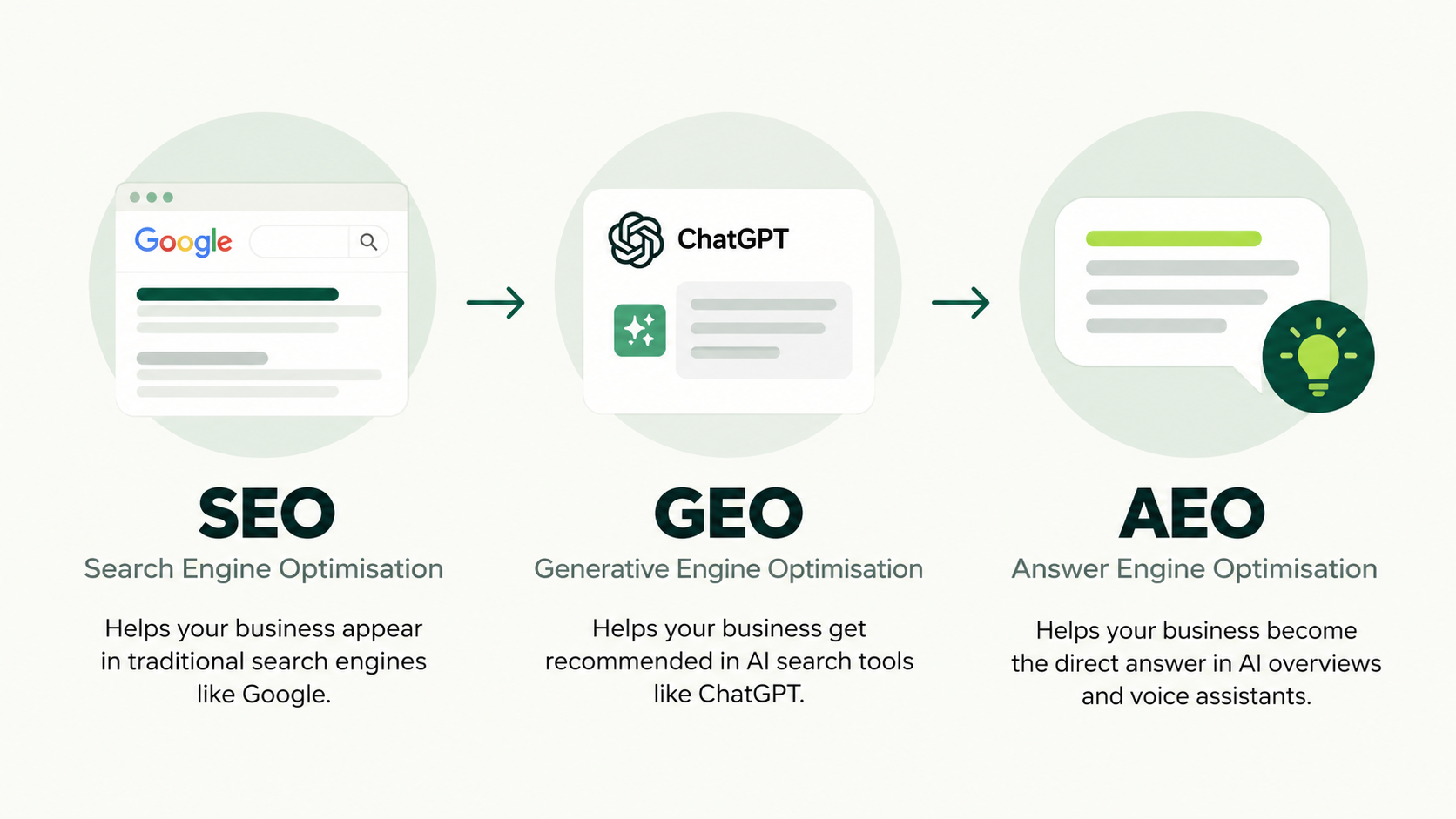
AI SEO and traditional SEO share many principles, but they place emphasis on different aspects of search visibility.
Traditional SEO focuses on organic search rankings and website traffic. AI SEO considers how businesses can remain discoverable across both conventional search results and AI-generated search experiences.
AI SEO is not a replacement for traditional SEO.
According to Google's official guidance on AI features, established SEO best practices remain relevant for appearing in AI Overviews and AI Mode.
This means businesses should continue investing in website performance, useful content, internal linking and technical accessibility.
For Singapore businesses, the practical approach is to strengthen existing SEO efforts while adapting content for AI-powered discovery.
How Do GEO and AEO Fit Into AI SEO?
Two important concepts associated with AI SEO are Generative Engine Optimisation (GEO) and Answer Engine Optimisation (AEO).
Although they overlap, each focuses on a different aspect of discoverability.
What Is GEO (Generative Engine Optimisation)?
GEO is the practice of improving how a business, brand or information source can be discovered, understood, mentioned or cited within generative AI experiences.
GEO focuses on making business information credible, consistent and useful to systems that generate responses.
Common GEO activities include:
- Publishing original and authoritative content.
- Demonstrating expertise through case studies.
- Maintaining consistent business information.
- Building a credible presence across relevant websites.
- Earning legitimate mentions from trusted sources.
- Monitoring brand visibility in AI-generated responses.
For example, a Singapore cybersecurity company could publish practical security guides, industry insights and case studies demonstrating its experience.
These resources provide useful information to potential customers and may also be retrieved by AI-powered search systems.
However, GEO cannot guarantee that a particular AI assistant will recommend a business.
What Is AEO (Answer Engine Optimisation)?
AEO is the practice of structuring content to provide clear, direct and useful answers to questions people ask search engines and AI-powered assistants.
AEO focuses on how information is written and organised.
Common AEO practices include:
- Using question-based headings.
- Answering questions directly.
- Writing concise definitions.
- Organising content into logical sections.
- Providing accurate supporting information.
- Using structured data where appropriate.
For example, instead of writing a long introduction before answering a question, a website could use the heading:
"How Long Does SEO Take to Show Results?"
The opening paragraph should answer the question directly, explaining that timelines depend on competition, website condition, content quality and the work involved.
Additional paragraphs can then provide more detail.
This structure improves readability for customers while making the content easier for search systems to interpret.
How SEO, GEO and AEO Work Together
SEO, GEO and AEO are most effective when treated as complementary approaches.
SEO helps search engines discover and understand your website.
GEO focuses on improving how your business and expertise may be represented in generative AI responses.
AEO helps make your content clear and useful for answering specific questions.
Together, they support a broader AI search optimisation strategy.
For a deeper explanation, read our guide to AI search optimisation for Singapore businesses.
How to Optimise Your Website for AI SEO
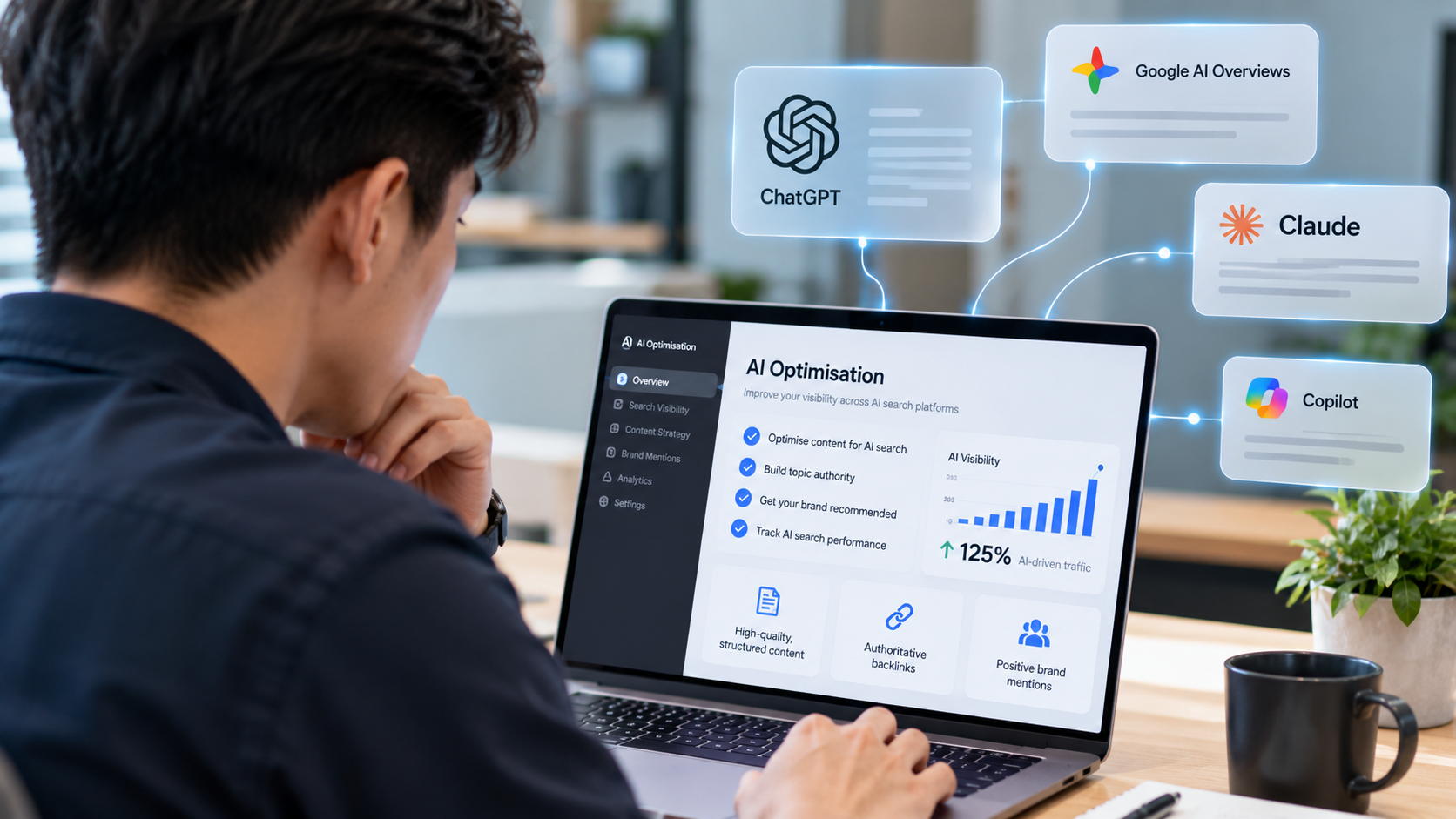
Improving AI search visibility does not necessarily require rebuilding your entire website.
For most businesses, the best starting point is to strengthen existing SEO foundations and make important information easier to understand.
Here are seven practical steps.
1. Build a Strong Technical SEO Foundation
A technically accessible website is essential for search visibility.
If search engines cannot crawl or index important pages, those pages may struggle to appear in search results.
Start by reviewing:
- Website crawling and indexing.
- Page titles and meta descriptions.
- Heading structure.
- Mobile responsiveness.
- Page loading performance.
- Internal navigation.
- Canonical URLs.
- XML sitemaps.
Google's AI search documentation confirms that there are no additional technical requirements specifically for appearing in AI Overviews or AI Mode beyond normal search eligibility.
This reinforces an important point: AI SEO begins with good SEO.
2. Create Content That Answers Customer Questions
AI-powered search is often conversational.
Instead of searching for a short keyword, customers may ask detailed questions about their needs.
For example, someone researching digital marketing might ask:
"Should my Singapore business invest in SEO or GEO?"
A useful article should answer the question directly before explaining the differences, benefits and limitations.
Consider creating content around:
- Common customer questions.
- Service comparisons.
- Pricing considerations.
- Implementation processes.
- Industry-specific challenges.
- Practical guides.
- Frequently misunderstood topics.
Google's helpful, reliable, people-first content guidelines emphasise original information, first-hand expertise and content that genuinely helps readers.
Rather than publishing articles simply to target keywords, focus on providing information your customers will find valuable.
3. Make Your Business Information Clear and Consistent
Your website should make it easy for visitors to understand who you are, what you offer and whom you serve.
Important information includes:
- Business name and location.
- Services and specialisations.
- Target customers or industries.
- Relevant experience.
- Contact information.
- Case studies or completed projects.
For example, a Singapore agency offering GEO and AEO services should clearly explain these services on dedicated pages rather than relying only on brief mentions throughout its website.
Business information should also remain consistent across relevant directories and profiles.
For local businesses, an accurate Google Business Profile can support visibility in Google Search and Maps.
Clear, consistent information also helps reduce ambiguity about your business across the wider web.
4. Demonstrate Experience and Expertise

Generic information is widely available online. Original experience gives customers a stronger reason to trust your business.
Google's people-first content guidance encourages creators to demonstrate first-hand experience and provide useful, original information.
Businesses can demonstrate expertise through:
- Detailed case studies.
- Project examples.
- Original research.
- Industry observations.
- Technical explanations.
- Practical solutions to customer problems.
For example, a website development agency could publish a case study explaining how it improved a client's website structure, performance and search accessibility.
The article could describe the original challenge, the approach taken and the results achieved.
Where possible, support claims with actual evidence rather than broad statements.
For GEO, original information may also provide useful material for AI systems to reference when answering relevant questions.
5. Strengthen Your Brand's Online Credibility
Your website is not the only place where customers can discover information about your business.
A credible online presence can include industry directories, professional profiles, editorial mentions, customer reviews and relevant partnerships.
For Singapore businesses, useful activities may include:
- Maintaining accurate business listings.
- Participating in relevant industry publications.
- Publishing genuine customer testimonials.
- Building relationships with industry partners.
- Sharing original expertise through credible channels.
These activities help customers verify information about your business.
They may also make relevant business information available through additional sources that AI-powered systems can retrieve.
Avoid artificial reviews, misleading claims or paid mentions presented as independent endorsements.
6. Use Structured Data Appropriately
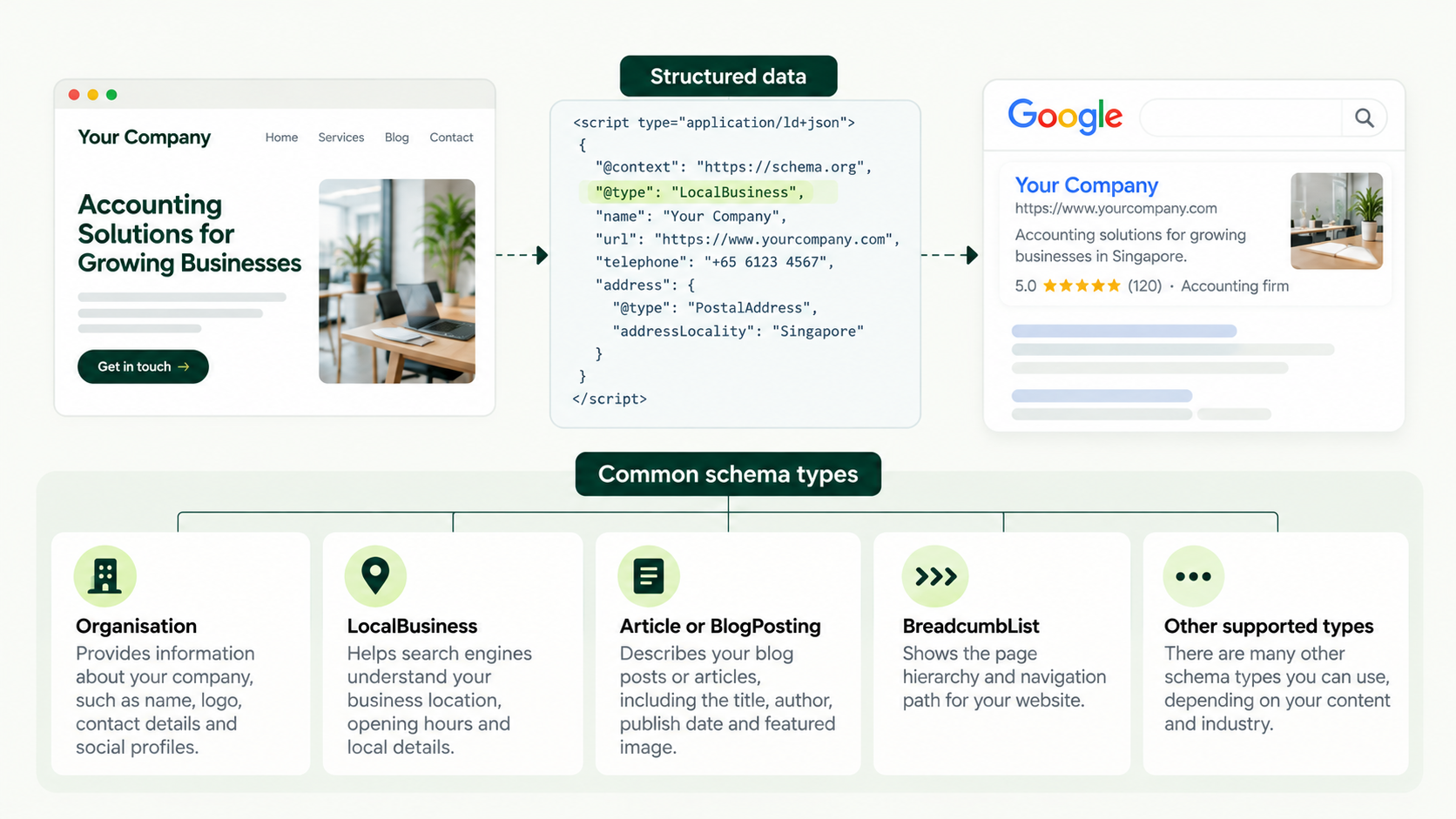
Structured data is a standardised way of providing additional information about a webpage to search engines.
It can help clarify the type of content on a page and describe relevant entities.
Depending on your website, appropriate schema types may include:
- Organisation
- LocalBusiness
- Article or BlogPosting
- BreadcrumbList
- Other supported types relevant to the page
Google explains how structured data works in its official structured data documentation.
For example, Article structured data can help Google understand information such as an article's headline, author and publication date.
However, structured data does not guarantee better rankings, rich results or AI-generated citations.
The priority should be accurate markup that reflects information visible on the page.
7. Build Relevant Internal Links
Internal linking helps visitors discover related content and allows search engines to understand relationships between pages.
For example, a website publishing content about AI SEO can link to related guides covering GEO, AEO and ChatGPT visibility.
A useful internal linking strategy connects educational content with relevant service pages.
For Plexial, this article connects naturally with our existing guide on how to get your business recommended by ChatGPT.
Internal links should be relevant and helpful rather than inserted simply to increase the number of links on a page.
Final Thoughts: Preparing Your Business for AI Search
AI SEO reflects a shift in how customers discover and evaluate businesses online.
Traditional search engines remain important, but AI-powered platforms are creating additional ways for customers to find information, compare services and explore potential providers.
For Singapore businesses, the most sustainable approach is to build on established SEO fundamentals while improving content clarity, online credibility and the usefulness of business information.
By combining SEO, GEO and AEO, businesses can develop a more complete search strategy that supports both traditional search and emerging AI-powered discovery.
Improve Your AI Search Visibility With Plexial
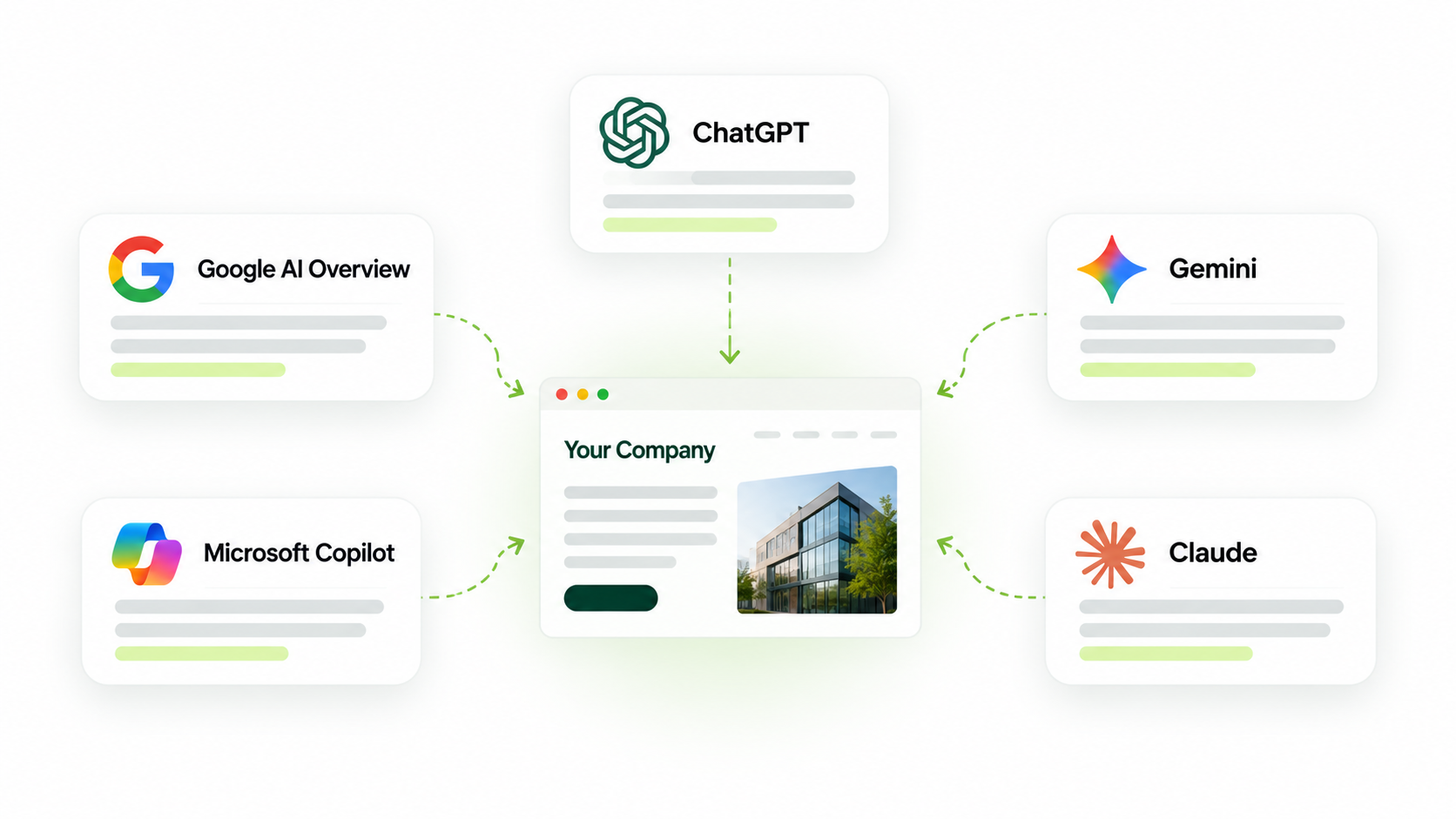
Is your business ready to be discovered across Google and AI-powered search platforms?
Plexial helps Singapore businesses improve their digital visibility through Search Engine Optimisation (SEO), Generative Engine Optimisation (GEO) and Answer Engine Optimisation (AEO).
We focus on practical strategies that make websites easier to discover, content more useful and business information clearer across search experiences.
Whether you want to strengthen your existing SEO foundation or explore opportunities in AI-powered search, Plexial can help you identify areas for improvement.
Contact Plexial to discuss how SEO, GEO and AEO can support your business's search visibility.
Written by
Jae Tan
Jae shares insights on technology, digital innovation, and business trends, helping businesses navigate change and uncover new opportunities.