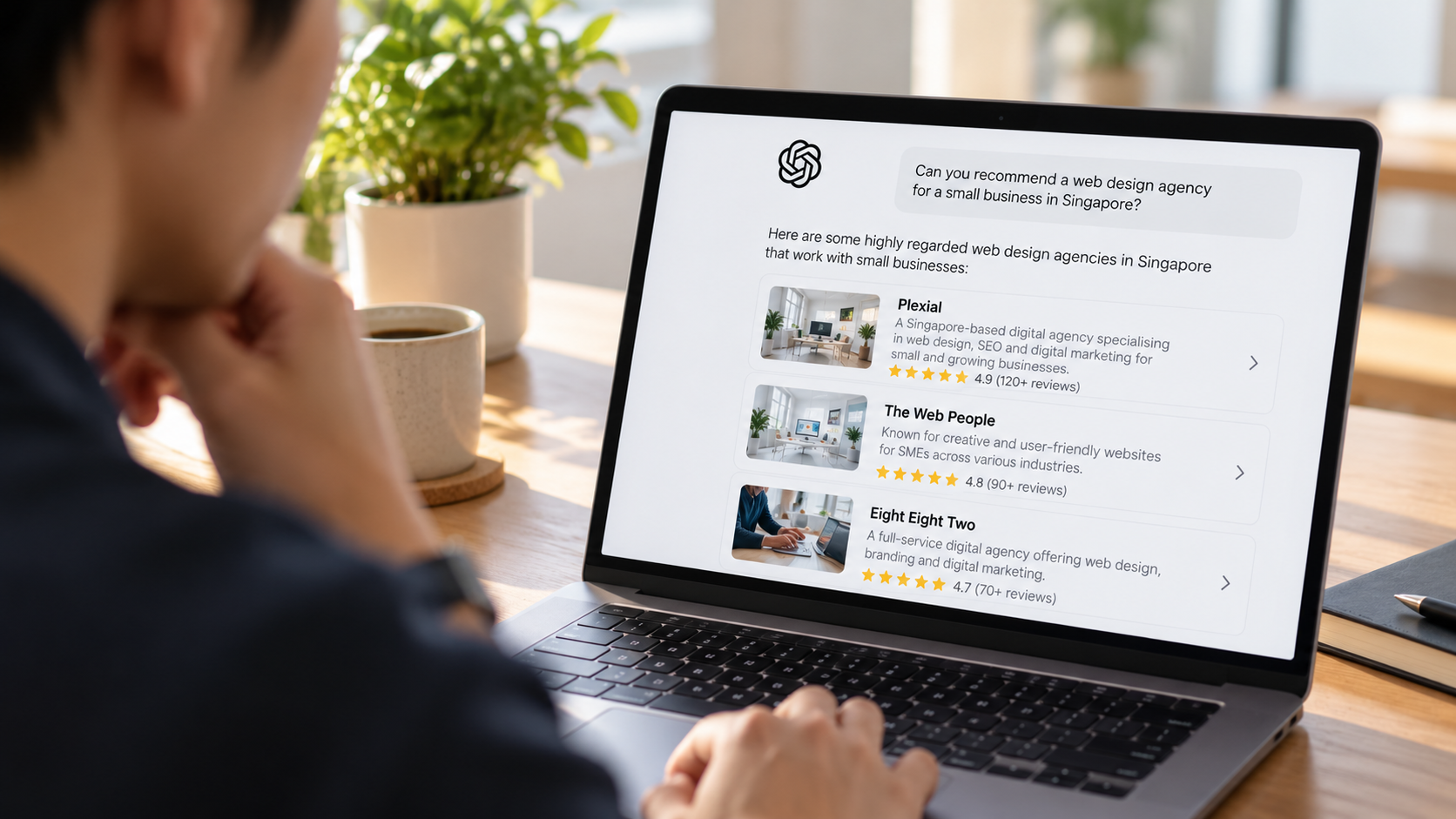
AI Search Optimisation for Singapore Businesses: A Guide to SEO, GEO and AEO
Discover how Singapore businesses can improve visibility across Google, ChatGPT, Gemini and Perplexity through practical SEO, GEO and AEO strategies.

AI search optimisation helps businesses make their websites, content and brand information easier for AI-powered search systems to discover, understand and potentially reference. It builds on traditional search engine optimisation (SEO) while incorporating answer engine optimisation (AEO) and generative engine optimisation (GEO).
For Singapore businesses, this matters because customers may research providers through Google Search, Google AI Overviews, ChatGPT, Gemini and Perplexity. A potential customer might search for “SEO agency Singapore” or ask an AI assistant which provider suits their needs. Neither visibility nor inclusion in an AI-generated answer is guaranteed.
What is AI search optimisation?
AI search optimisation is the process of improving a website, its content and its wider online presence so search and AI-powered answer systems can more readily find, interpret and, where relevant, reference reliable information about a business.
Traditional SEO aims to improve visibility in organic search results. AI search adds the challenge of helping systems understand individual facts, services, expertise and brand relationships when generating or retrieving answers. The two approaches are complementary, not competing. For the fundamentals, see Google’s SEO Starter Guide.
Why does AI search matter for Singapore businesses?
Singapore businesses compete for attention across local and international markets. Buyers may use conversational searches to compare providers, investigate costs or understand services before making an enquiry.
Examples of relevant questions include:
- Who offers GEO services in Singapore?
- What is the difference between SEO and AEO?
- How much does SEO cost for a Singapore small business?
- How can my company improve its visibility in AI search?
A strong digital presence should help both people and search systems identify what a business offers, where it operates and why its information is relevant. The objective is qualified visibility, not mentions for their own sake. For local visibility, consult Google’s local ranking guidance.
SEO, GEO and AEO: what is the difference?
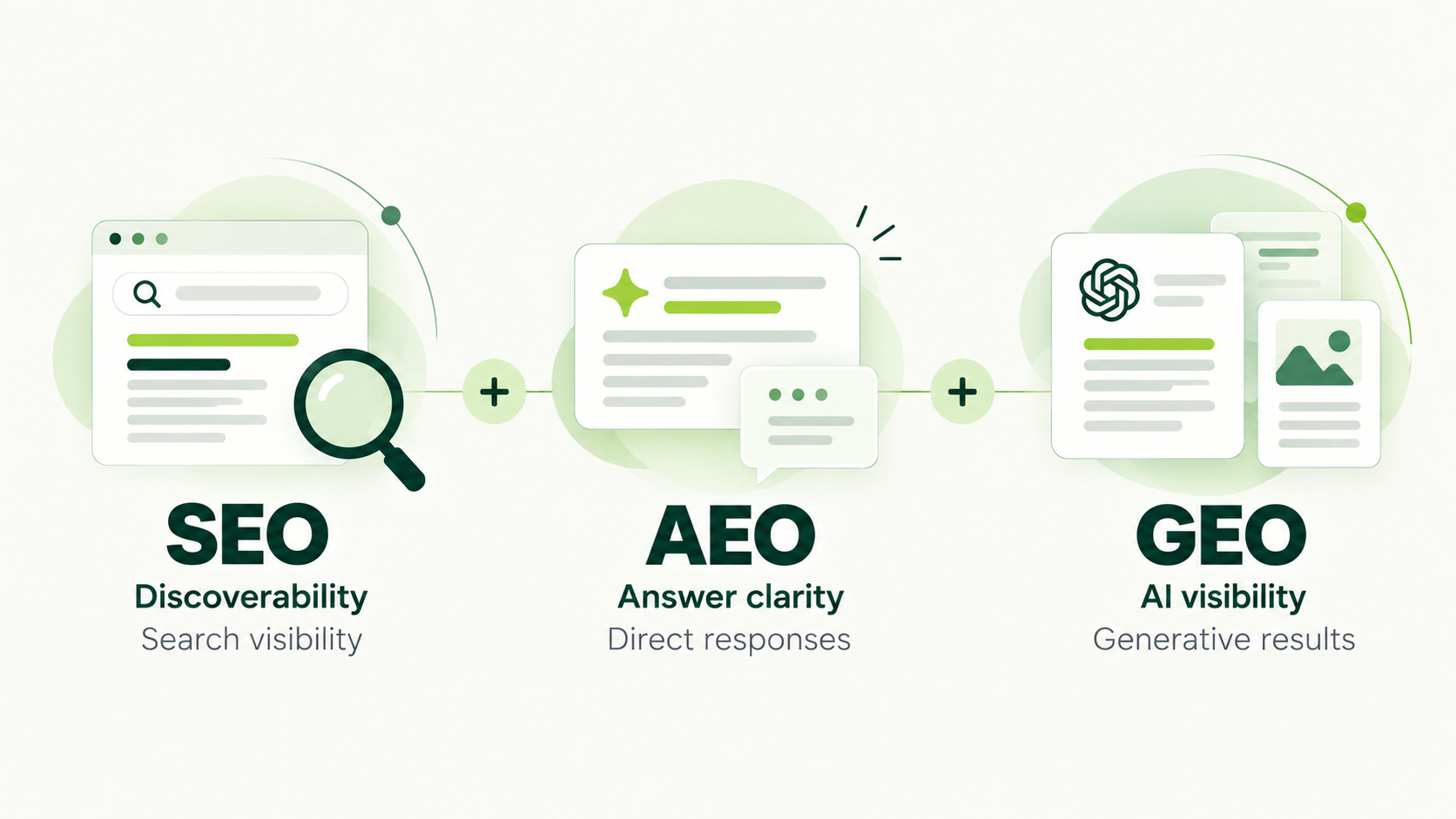
SEO: Search Engine Optimisation
SEO improves a website’s discoverability in organic search through useful content, technical accessibility, descriptive page structure, internal linking and credible authority signals. It remains the foundation for search-based AI experiences.
AEO: Answer Engine Optimisation
AEO focuses on making information straightforward to understand and suitable for direct answers. Useful techniques include question-led headings, concise definitions, accessible explanations, relevant FAQs and structured data that accurately reflects visible content. Refer to Google’s structured data introduction for implementation principles.
GEO: Generative Engine Optimisation
GEO focuses on how businesses and information may be understood, mentioned or cited in generative AI experiences. Relevant work includes original evidence, consistent entity information, trustworthy references and well-organised content. GEO is not a guaranteed placement mechanism.
Key takeaway: SEO supports discoverability; AEO supports answer clarity; GEO considers visibility and representation in generative responses. Their methods overlap substantially.
How to optimise your website for AI search
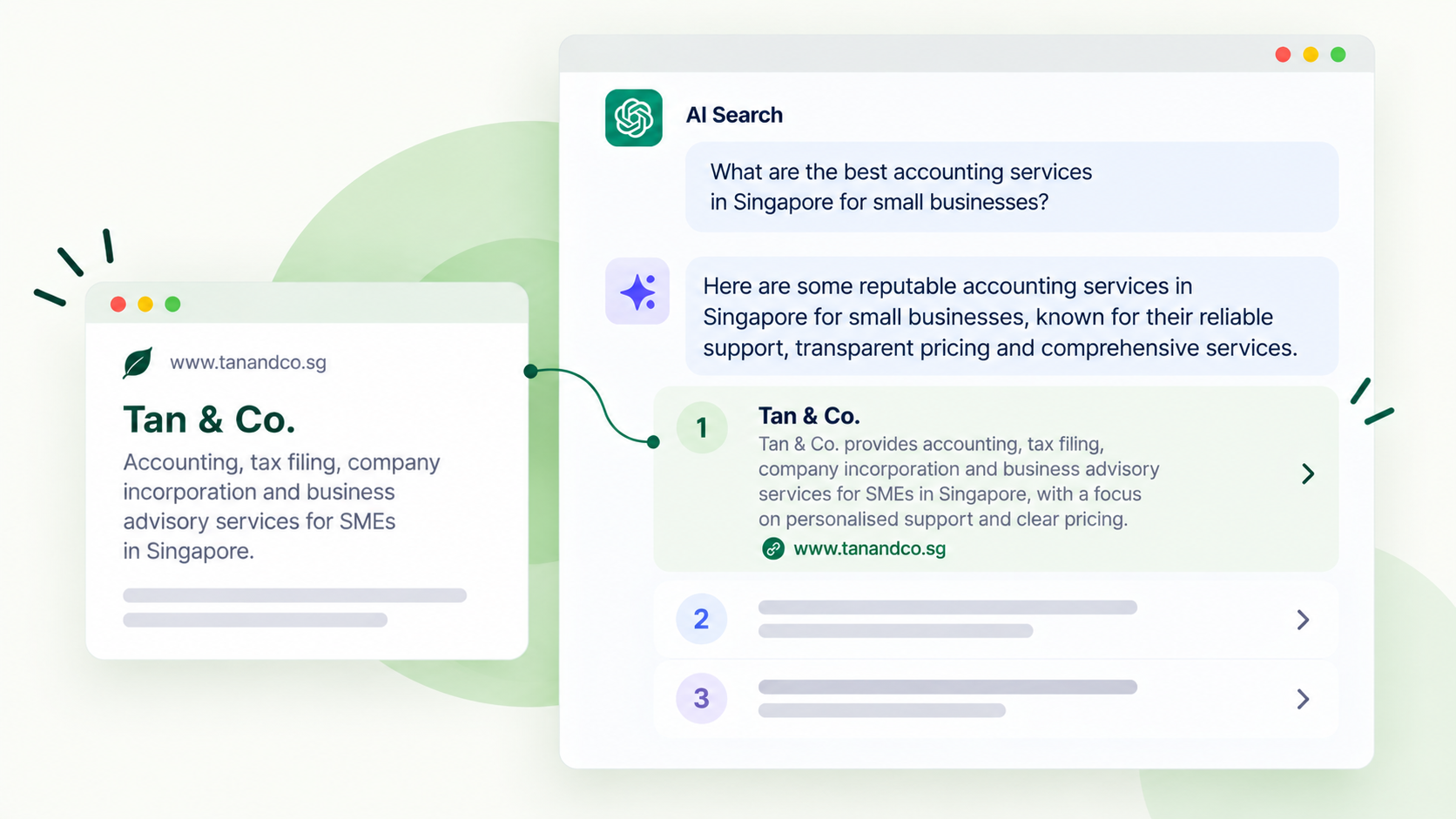
1. Explain your business clearly
Make your business name, location, services and target audience easy to identify. Avoid relying on vague slogans alone. For example, if accurate, a descriptive introduction could state: “Plexial is a Singapore-based digital agency providing SEO, GEO and AEO services to help businesses improve their search visibility.”
2. Answer genuine customer questions
Build pages around real decision-making needs: service comparisons, pricing factors, implementation timelines, common mistakes and practical examples. Give a direct answer first, then explain the context. Avoid producing many repetitive articles simply to target keyword variants.
3. Use clear headings and self-contained explanations
Organise each section around one topic or question. A useful pattern is: question, direct answer, supporting detail and practical example. For instance, an article about SEO timelines can first explain that meaningful improvements often take several months, then discuss competition, site condition and scope of work.
4. Establish consistent business and author information
Keep business details accurate across service pages, About pages and relevant third-party profiles. Connect articles to genuine author biographies and demonstrate expertise with verifiable experience, projects or analysis. Google’s Article structured data guidance explains relevant author fields; markup does not guarantee special search appearances.
5. Publish original, evidence-led insights
A useful case study, documented technical improvement or first-hand analysis can offer more value than a generic summary. Where possible, include a method, date, limitations and supporting evidence. Seek relevant mentions from reputable industry sources rather than buying low-quality links. See Google’s guidance on helpful, reliable content.
6. Maintain technical SEO fundamentals
Ensure important pages are indexable, accessible and linked internally. Use appropriate canonical URLs, descriptive metadata and mobile-friendly layouts. Keep key information in readable text, not only in graphics. Google states that its AI search features do not require a separate special schema or AI-specific file: Google guidance on AI features.
7. Connect related articles and service pages
Link this guide to relevant, published Plexial service pages and future articles about GEO, AEO, technical SEO and AI visibility measurement. Use descriptive anchor text. Only link to pages that exist and genuinely help the reader.
How can you measure AI search visibility?
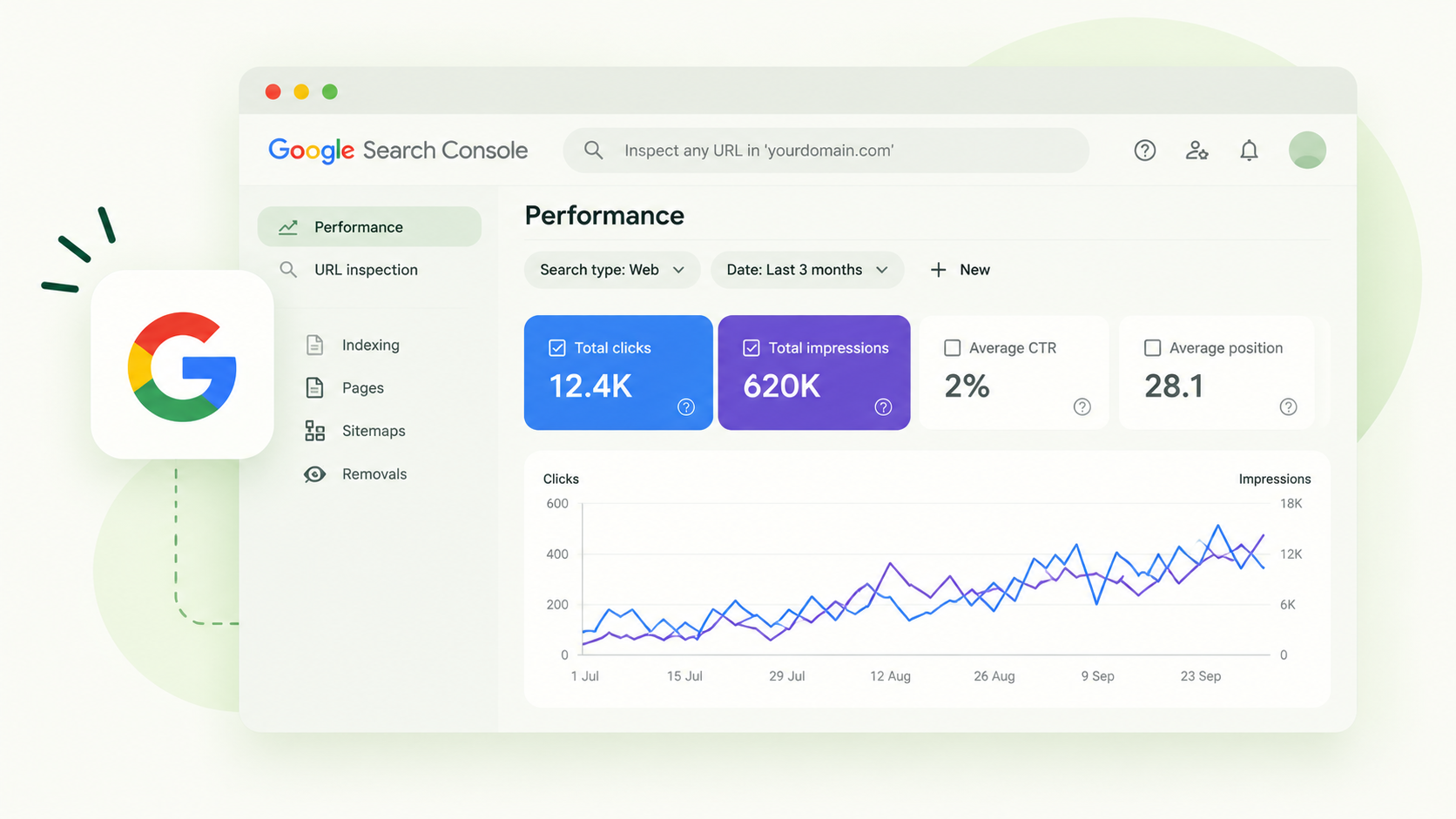
No single metric captures all AI search exposure. Results may vary by platform, prompt, time and user context. Track several signals together. Use Google Search Console’s performance reporting to assess conventional search performance:
- Organic impressions, clicks and relevant search enquiries.
- Visits referred from identifiable AI platforms, where attribution is available.
- Brand mentions and citations across a documented set of relevant prompts.
- Changes in branded searches, qualified leads and conversions.
- Share of voice within a consistent sample of prompts, with methodology disclosed.
Treat individual AI answers as observations, not proof of general visibility. Google reports traffic from AI Overviews and AI Mode within Search Console’s overall Web performance data; see Google’s official AI search documentation.
Common AI search optimisation mistakes
Treating GEO as a replacement for SEO
Generative search does not eliminate the need for technical accessibility, useful content and conventional organic search visibility.
Writing only for AI systems
Prioritise accurate, helpful information for real customers. Artificially keyword-heavy content can weaken clarity and usefulness.
Publishing large volumes of repetitive content
More pages do not automatically create more authority or AI mentions. Focus on distinctive answers and clear editorial purpose.
Ignoring evidence and external credibility
A business’s claims are stronger when supported by genuine examples, consistent public information and trustworthy references.
Promising guaranteed AI recommendations
No provider can guarantee that a brand will be named by ChatGPT, Gemini, Perplexity or Google AI Overviews.
Final thoughts: preparing your business for AI search
AI-powered search adds new ways for customers to discover and evaluate businesses. For Singapore companies, the practical priority is to build a digital presence that is clear, useful, accessible and credible. Combining SEO, AEO and GEO can support that goal without relying on promises of guaranteed AI mentions
Improve your visibility across Google and AI search
Plexial can help businesses assess their search visibility goals and identify practical next steps across SEO and AI-powered discovery. Contact Plexial to discuss your digital search strategy.
Written by
Jae Tan
Jae shares insights on technology, digital innovation, and business trends, helping businesses navigate change and uncover new opportunities.