Why Is My Website Getting Traffic but Not Enquiries?
Getting website traffic but few enquiries? Here are 9 common causes Singapore SMEs can check in Search Console, GA4 and on their own pages, and what to fix first.

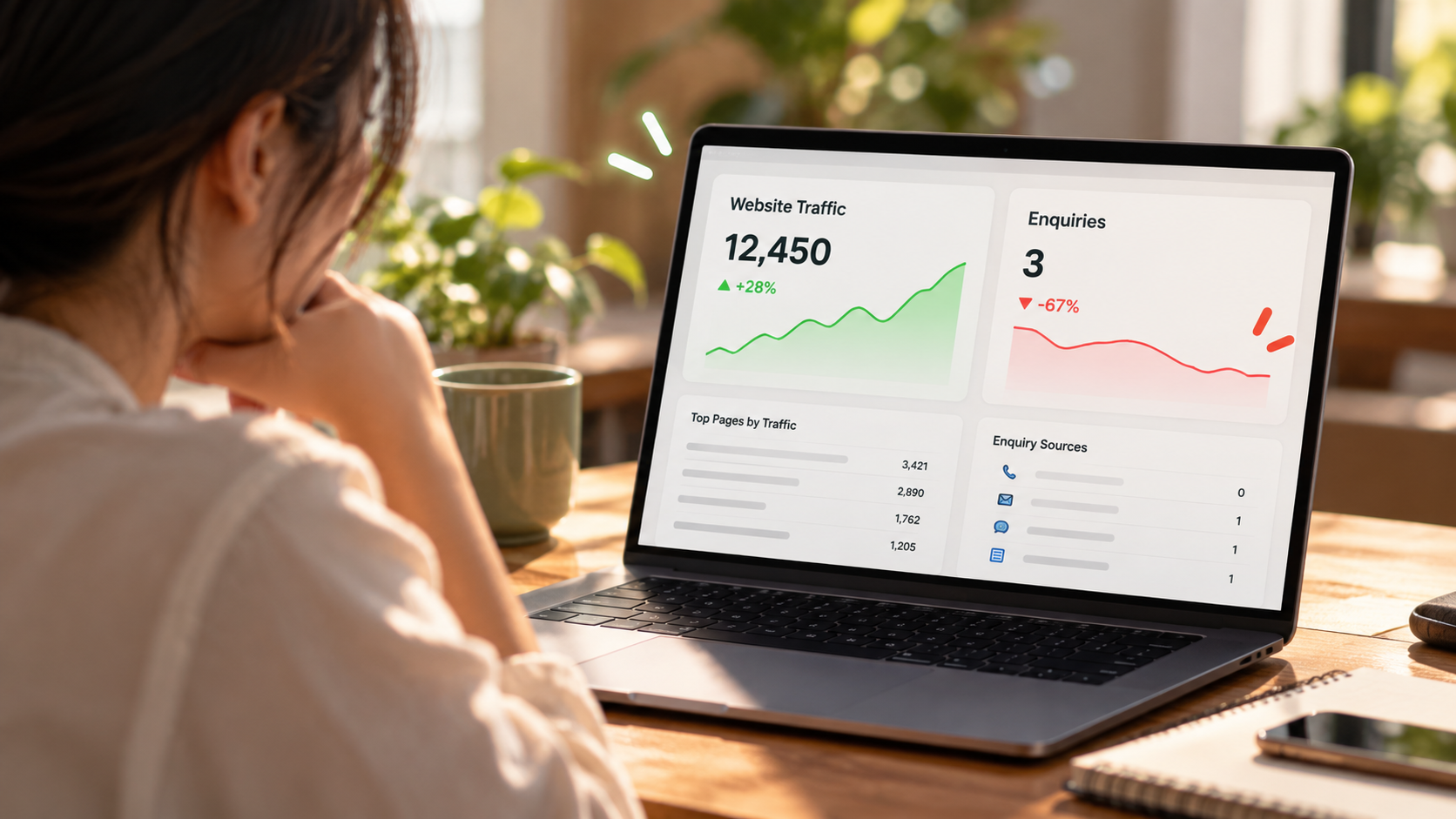
If your website gets traffic but few enquiries, the cause is usually one of four things: enquiries aren't being tracked, the wrong visitors are arriving, the page they land on doesn't convince them, or getting in touch is harder than it should be. Each can be checked in Google Search Console, GA4 and your own pages.
Traffic on its own is not the goal; enquiries are. This article walks through 9 causes in the order to check them. Most checks take minutes, not days.
Are your enquiries really missing?
Not always: sometimes enquiries are happening but aren't being counted. Before you change anything, confirm that every enquiry is tracked. Many sites track page views but not the actions that matter.
Count every way people contact you

List every enquiry route on your site: form submissions, WhatsApp clicks, phone clicks, email clicks and booking widgets. In GA4, set the events that represent these as key events. Google describes key events as the way to measure actions that are important to your business. For forms and information requests, GA4's recommended event is generate_lead, which is triggered when a user submits a form or a request for information.
If enquiries arrive by WhatsApp or phone and nobody records where they came from, the website may be doing better than it looks.
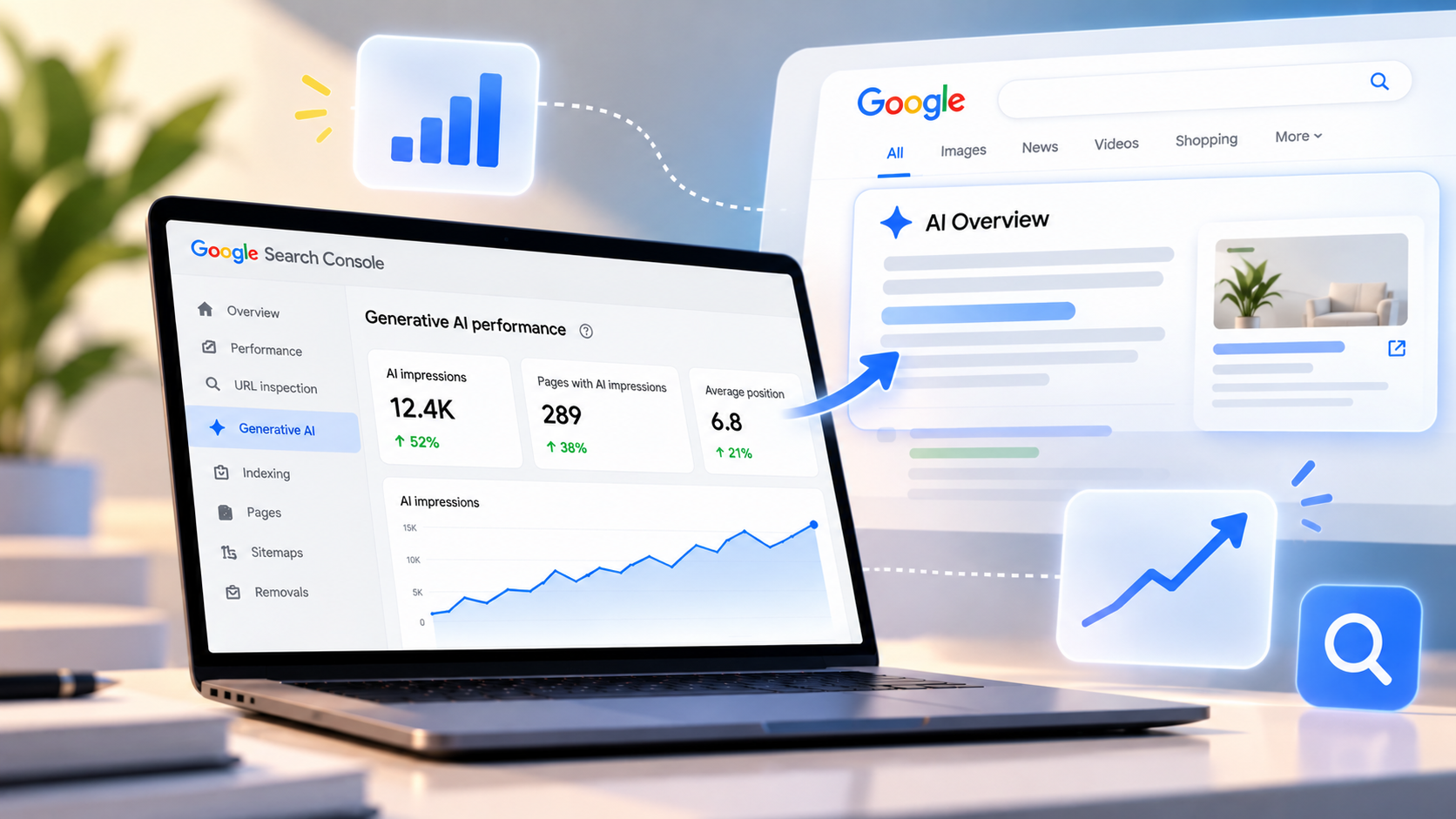
Once tracking works, you can also track your visibility in Google AI Overviews alongside traffic and enquiries.
Compare enquiries with the right traffic
Compare enquiries with organic search visits to your service pages, not total sessions. Blog readers and overseas visitors inflate the total.
Traffic problems: are the wrong people arriving?
Often, yes. Traffic quality matters more than volume, so check who is arriving first. Google Search Console's Performance report shows which queries bring traffic to your site, and you can group the data by Queries, Pages, Countries and Devices.
1. You rank for research questions, not buying searches

Your site may rank for questions people ask while learning, not searches they make when ready to hire. Someone searching "how to file GST" wants instructions. Someone searching "GST filing service Singapore" wants a provider.
Open the Queries tab and read your top queries by clicks. Ask of each: would this person pay for what we sell? If mostly not, build or strengthen pages for the searches your buyers use.
Our SEO services in Singapore start from the searches that lead to enquiries, not just visits.
2. Visitors land on blog posts with no next step
Articles attract readers, but readers leave if there is no next step. Check your most visited articles in the Pages tab: does each link to the relevant service? Add one contextual link to the matching service page and one soft call to action per article.
3. The traffic isn't from your market

A Singapore-only service that ranks for global queries gets visitors who can never buy. Use the Countries and Pages dimensions in Search Console to see where clicks come from and which pages they reach. If many come from countries you don't serve, make your location and service area explicit on key pages.
Page problems: do visitors understand and trust you?
Not always. Visitors decide quickly whether a page is for them, and an unclear or unconvincing page loses them. Each cause below covers the problem, how to check it and the first fix.
4. The service page doesn't say clearly what you do, for whom and where
If your service page opens with a slogan, visitors have to work out whether you can help. Read its first screen: it should state the service, the type of customer and "Singapore" in plain words. Google's guidance on helpful, people-first content offers a useful test: would a visitor leave satisfied? If not, rewrite the opening lines.
5. There is no price signal or idea of what happens next
Buyers hesitate when they can't gauge cost or process. Give a starting price, a range or a short "what affects the price" section, plus a few lines on what happens after someone enquires. Our own article on how much SEO costs in Singapore is one example of explaining pricing openly.
6. There isn't enough proof

Nielsen Norman Group's article on trustworthiness in web design notes that websites must establish trust to turn visitors into customers. It names 4 credibility factors: design quality, up-front disclosure, comprehensive and current content, and connection to the rest of the web. In a usability study NN/g conducted in Singapore, it found that, despite some cultural nuances, these basic trust factors held across Western and Asian users.
Practical fixes: real team names and photos, your address, case examples, reviews and clear business details.
7. The page is slow or awkward on mobile
Google's Core Web Vitals measure real-world loading, interactivity and visual stability, and Google advises that Largest Contentful Paint (LCP) should occur within the first 2.5 seconds.
Test your main service page on your own phone over mobile data, then check the Core Web Vitals report in Search Console.
Contact problems: is getting in touch harder than it should be?
Sometimes it is. The right visitor can reach the right page and still struggle to contact you.
8. The call to action is buried or vague
Each page needs one clear primary action, such as "Get a quote" or "Book a consultation", visible without scrolling on mobile and repeated after key sections. Avoid several competing buttons.
9. The form asks too much, or the contact route people prefer is missing
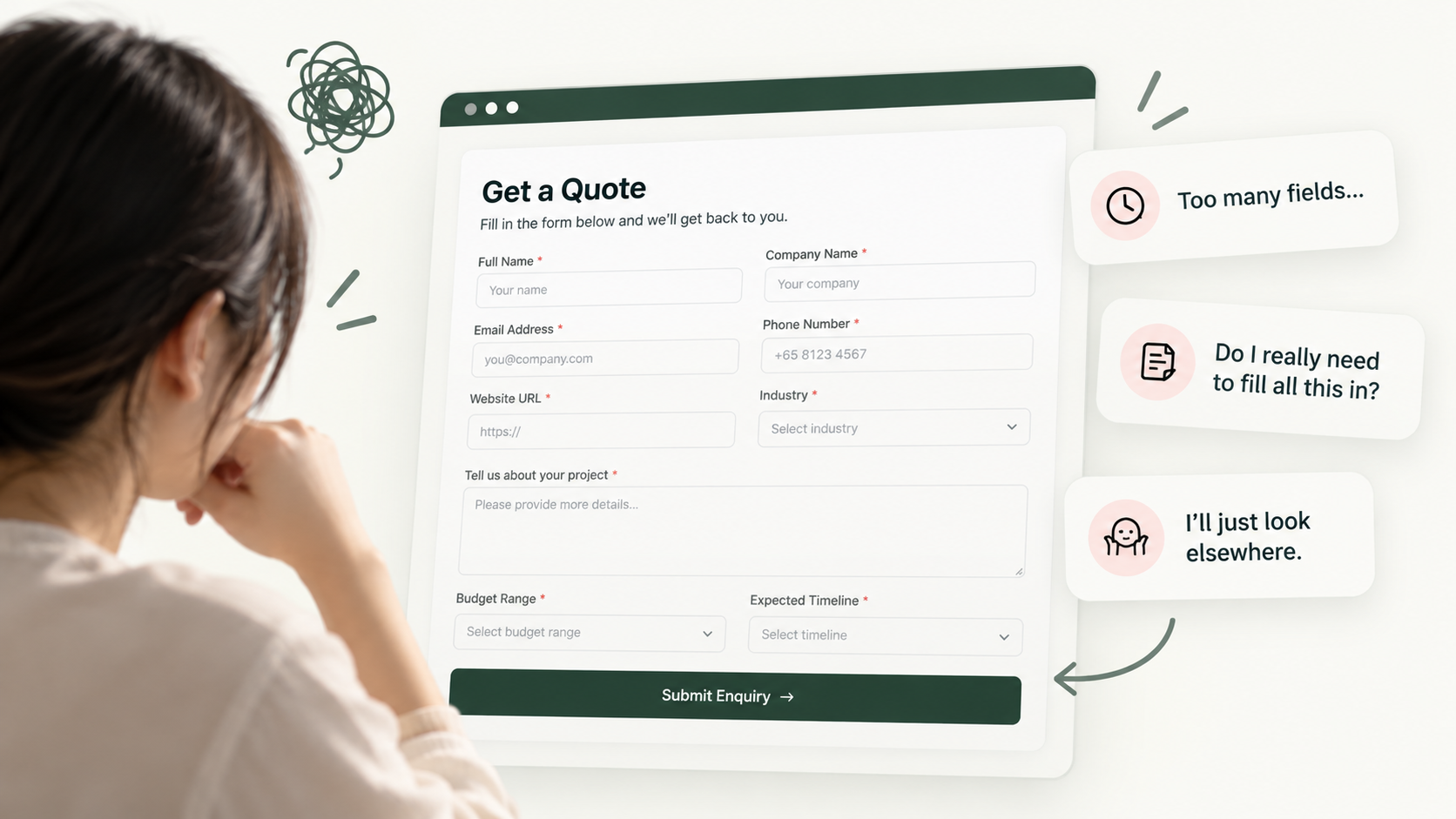
NN/g's form usability recommendations advise removing unnecessary fields, which reduces user effort and increases completion rates.
Offer the channels your customers actually use, whether that is WhatsApp, phone, email or a form.
For businesses in Singapore, it's worth considering how customers prefer to get in touch. Some visitors may find WhatsApp more convenient than filling out a traditional enquiry form, particularly when they have a quick question or want an immediate response.
Offering WhatsApp alongside your contact form gives potential customers another way to reach you. The key is to make contacting your business as simple as possible, whether visitors prefer messaging, calling or submitting an enquiry.
Test the form yourself and confirm submissions arrive. Broken forms and spam-folder issues are common silent failures.
How did one service business fix this?
By working on search traffic, pages and contact paths together. Here is an example from Plexial's work:
Turning Search Into Real Leads
"A service-based business was generating traffic but struggling to turn search visibility into enquiries. We strengthened its technical SEO, rebuilt high-intent content, and improved conversion pathways, helping generate 3.4× more qualified leads from organic search."
Published result (service-based business): 3.4× More qualified leads from organic search
The three actions map to the cause groups in this article:
- Technical SEO: page problems.
- High-intent content: traffic problems.
- Conversion pathways: contact problems.
This example shows why increasing website traffic alone is not enough. By improving the quality of search traffic, making pages more relevant to potential customers, and simplifying the enquiry process, businesses can turn existing visibility into meaningful opportunities.
The key takeaway is simple: getting visitors to your website is only half the job. Giving them a reason and an easy way to enquire is what turns traffic into leads.
Does AI search change this?
Yes, it makes measuring enquiries more important. AI Overviews and assistants such as ChatGPT can answer research questions without a click, so some informational traffic may fall, while the visitors who do arrive may be further along in their decision.
Measure AI search visibility alongside traffic and conversions: track your visibility in Google AI Overviews.
Read more about how long it takes to appear in AI search results and how to get your business recommended by ChatGPT. For help, see our GEO and AEO services.
How can you check your own site this week?
Work through the 9 causes in order, using the table below.
Symptom | Where to look | Likely cause | First fix |
|---|---|---|---|
Top queries are "how to" questions | Search Console: Queries | Research intent | Pages for buying searches |
Blog posts get most visits | Search Console: Pages | No next step | Service link and soft CTA |
Clicks from abroad | Search Console: Countries | Wrong market | State location and area |
Quick exits from service page | First screen | Unclear offer | Say what, for whom, where |
Price questions, or silence | Service page | No price signal | Range and next steps |
Visits but no trust | Service page | Too little proof | Team, reviews, cases |
Slow on your phone | Core Web Vitals | Slow mobile page | Fix key pages first |
Scrolling, no action | Pages on mobile | Buried CTA | One primary action |
Few form submissions | Form and inbox | Long form, missing channel | Cut fields, test, add channels |
Frequently asked questions
Why is my website getting traffic but no enquiries?
Usually one of four things: enquiries aren't being tracked, the traffic has the wrong intent or location, the landing pages don't explain or prove enough, or the contact path is hard to use. Check them in that order.
How do I know if my website traffic is the right kind?
Open the Performance report in Google Search Console and look at the queries and pages that bring clicks. If most are research questions, or come from countries you don't serve, the traffic is unlikely to turn into enquiries.
How do I track enquiries from my website in GA4?
Create or identify events for each enquiry action, such as form submissions and WhatsApp or phone clicks, then mark them as key events in GA4. Google recommends the generate_lead event for form submissions and information requests.
Can SEO fix a website that gets traffic but no enquiries?
Often, in part. SEO can shift traffic towards buying-intent searches and improve the pages visitors land on. Conversion paths such as CTAs, forms and proof also need attention, and the best results come from fixing both together.
Is high traffic with low enquiries always a problem?
Not always. Blog and research traffic builds awareness and rarely converts straight away. It becomes a problem when your service pages get visits from the right audience but still produce few enquiries.
Does AI search mean fewer website visits?
It can reduce clicks for simple research questions, because AI answers some of them directly. That makes the visitors who do arrive more valuable, so measure enquiries as well as traffic.
Final thoughts
Traffic is only useful if the right people arrive and find it easy to act. Start with tracking, so you know what is really happening. Then check the searches bringing people in, the pages they land on and the routes they use to contact you. Most of these checks need only Search Console, GA4 and your own phone. Fix the cause that is costing you the most enquiries first, then work through the rest, rather than changing everything at once.
Getting traffic but not enough enquiries?
We'll review the searches bringing people to your site, the pages they land on and the paths they take to contact you, then show you what to fix first.
Written by
Jae Tan
Jae shares insights on technology, digital innovation, and business trends, helping businesses navigate change and uncover new opportunities.